
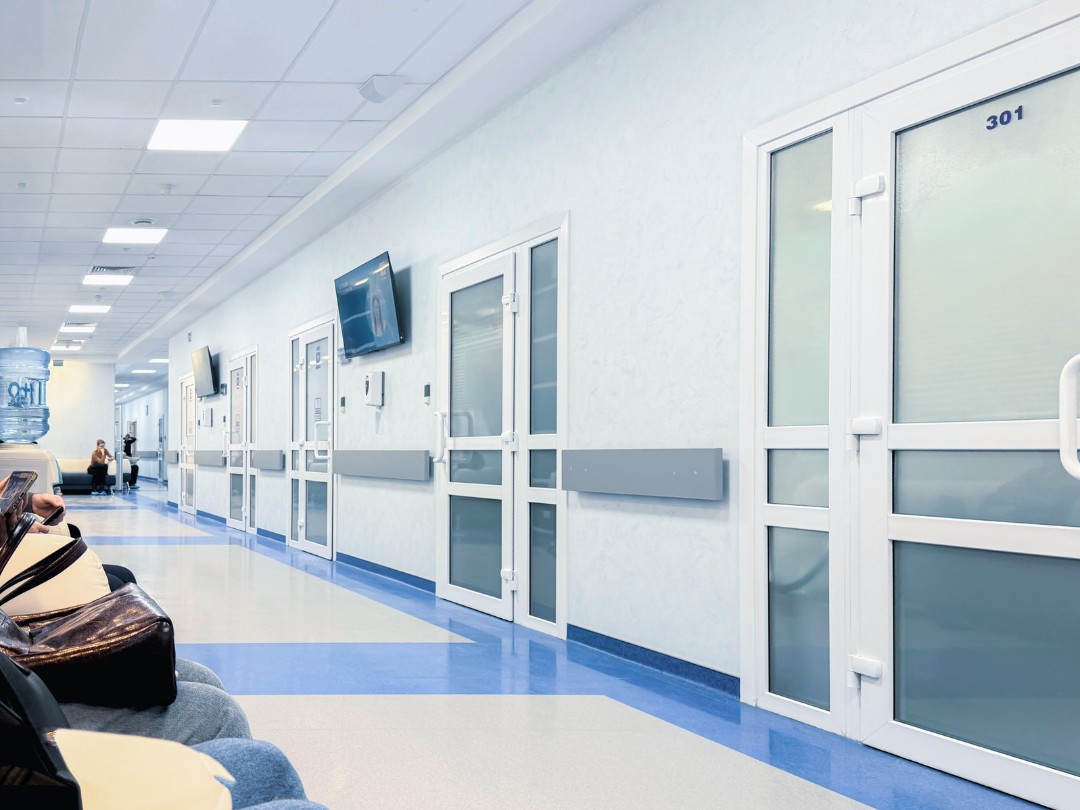
Healthcare facilities must protect patients, staff, visitors, and sensitive information while maintaining an environment built on trust and confidentiality. Although surveillance cameras and access control systems can strengthen security, improper implementation may create unnecessary privacy concerns.
A thoughtful security strategy helps healthcare organizations address potential threats without compromising patient dignity. Here are five ways healthcare facilities can enhance security while protecting patient privacy.
Strategy 1: Position Security Cameras in Appropriate Areas
Strategic camera placement allows healthcare facilities to monitor security-sensitive locations without unnecessarily intruding on patient care. Entrances, waiting areas, corridors, and parking lots can present security risks, including unauthorized access and potentially threatening behavior [1].
Position cameras to monitor relevant activity while minimizing views into examination rooms, restrooms, and other private spaces. In certain circumstances, privacy masking features can further restrict unnecessary visibility. Video surveillance is also recognized as a potential security measure in high-risk hospital environments, including emergency departments [2].
Strategy 2: Use Access Control to Protect Restricted Areas
Healthcare facilities contain numerous areas that require restricted access, including pharmacies, laboratories, medication storage rooms, and spaces housing sensitive information.
Electronic key cards, employee identification badges, visitor credentials, and other access control measures can help facilities manage who enters designated areas [3]. Access permissions should reflect each individual’s responsibilities, allowing authorized personnel to enter necessary spaces while limiting unnecessary access.
Integrating access control with surveillance cameras can also help security teams investigate suspicious entry attempts and verify security incidents.
Strategy 3: Secure Surveillance Footage and Limit Access
Protecting patient privacy extends beyond camera placement. Healthcare organizations must also consider how surveillance recordings are stored, accessed, and shared.
The HIPAA Security Rule requires appropriate safeguards for electronic protected health information, including access controls, authentication, and mechanisms for examining system activity [4]. When recordings contain protected health information, facilities should evaluate applicable HIPAA requirements and implement appropriate protections.
These may include restricted viewing permissions, secure authentication, encryption, and established retention policies. Cloud providers that maintain electronic protected health information on behalf of regulated healthcare organizations generally require a HIPAA-compliant business associate agreement [5].
Strategy 4: Integrate Security Technologies for Better Incident Response
A coordinated security system can help healthcare personnel identify and respond to potential threats more effectively.
Surveillance cameras, alarm systems, and electronic access controls are among the technologies healthcare organizations can consider when developing comprehensive facility security plans [3] When integrated, these solutions can provide additional context during incidents involving unauthorized entry or suspicious activity.
Depending on system capabilities, intelligent video analytics may also alert security personnel to predefined activity near restricted areas. These features can support timely investigations while limiting unnecessary monitoring through carefully configured detection zones.
Strategy 5: Conduct Security assessments and Train Staff
Even advanced security technology requires ongoing evaluation and knowledgeable personnel.
Healthcare security planning should include risk assessments, employee training, and periodic reviews of facility safeguards [3, 4]. Administrators should regularly evaluate camera positioning, access permissions, and incident response procedures to identify potential weaknesses.
Worksite analyses can help healthcare organizations identify security hazards and develop measures to address them [6]. Training employees on appropriate surveillance practices and privacy expectations further supports a responsible security environment.
Strengthen Security of Your Healthcare Facility Without Compromising Patient Trust with Surveillance Secure
Effective healthcare security requires balancing reliable protection with respect for patient privacy. Strategically positioned cameras, controlled access, secure video management, and integrated monitoring technologies can help facilities maintain safer environments without unnecessary intrusion.
Protect your patients, staff, and facility with security solutions designed around your organization’s unique needs. Contact Surveillance Secure today to explore customized video surveillance and access control systems that strengthen protection while keeping patient privacy a priority.
Sources:
- https://www.osha.gov/etools/hospitals/hospital-wide-hazards/workplace-violence
- https://www.osha.gov/etools/hospitals/emergency-department/workplace-violence
- https://www.hhs.gov/hipaa/for-professionals/security/guidance/cybersecurity-newsletter-august-2024/index.html
- https://www.hhs.gov/hipaa/for-professionals/security/laws-regulations/index.html
- https://www.hhs.gov/hipaa/for-professionals/special-topics/health-information-technology/cloud-computing/index.html
- https://www.jointcommission.org/en-us/knowledge-library/workforce-safety-and-well-being-resource-center/workplace-violence-prevention/worksite-analysis


 Virginia DCJS Private Security Services ID #11-6085